Blog Post
Higher Education Marketing: Strategies and Trends

Higher Education Marketing: Strategies and Trends
Higher Education Marketing: Strategies and Trends
In today’s competitive landscape, higher education institutions are constantly seeking innovative ways to attract and engage prospective students. The rise of digital media has made marketing both more complex and more effective. This article explores current strategies, trends, and practical insights for higher education marketing, supported by recent data.
Best Platforms to Market Educational Offerings
Effective digital marketing depends on identifying platforms where high-volume awareness channels overlap with high-intent conversion channels. According to the 2024 Conversion Benchmark Report, the most effective channels for conversions in higher education are:
1. Email Marketing
- Median conversion rate: 14.1% (nearly double the second-highest channel)
- Ideal for post-lead nurturing and enrollment yield
2. Paid Search (SEM)
- Median conversion rate: 7.3%
- Captures prospects actively exploring programs and considering enrollment
3. Paid Social
- Median conversion rate: 5.1%, though top-performing Instagram campaigns reached 39%
- Best used for top- and mid-funnel engagement; warm leads should be passed to email and SEM for higher conversions
Key takeaway: Social media is ideal for engagement and awareness, but email and search dominate conversion-focused efforts. Integrating AI and automation can further boost campaign efficiency.
Email Marketing Strategies
Email remains one of the most effective channels for higher education marketing:
- Permission-based communication: Unlike social media, email reaches prospects, parents, and alumni directly.
- Preferred by students: 77% of students prefer email for communication during later stages of college search (EAB, 2025).
- Personalization is critical: Tailor messages based on academic interests, location, and application progress.
Example: Arizona State University uses dynamic email content to highlight degree options, campus facilities, and personalized next-step reminders, creating relevant, actionable messages.

2024 Email Marketing Data:
- 361.1 billion emails sent globally
- 4.48 billion email users worldwide
- Tuesday is the most effective day to send emails (35%)
- Average ROI: $36 per $1 spent
- 79% of millennials and 57% of Gen Z like being contacted via email
- 65% of marketers use personalized subject lines
Short-Form Video (SFV)
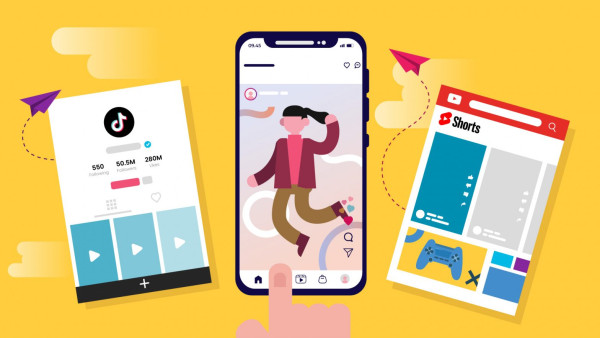
Video dominates content consumption, with forecasts showing 82% of global internet traffic will be video by 2025. Short-form video (SFV) on platforms like TikTok and Instagram Reels is increasingly essential to engage prospective students.
Best practices:
- Focus on authentic, peer-driven content rather than polished promotional materials
- Highlight student interests, academic ambitions, and career goals
Case Study: “College Is Worth It 2” (CIWI 2) Campaign
- Cost per Link Click (CPC): $0.18 (as low as $0.13)
- Over 972,000 video plays and 769,000 engagements
- More than 5x cost-effective compared to industry benchmarks on Meta platforms
SFV demonstrates that relatable, student-centered storytelling can outperform traditional marketing in reach, engagement, and ROI.
Involving Students Through Podcasts
Podcasts give students a voice and foster authenticity:
- Students act as trusted peer ambassadors, building credibility and emotional connections
- Podcast engagement continues to grow: 584 million global listeners in 2025, expected to reach 619 million by 2026
- 70% of listeners tune into most episodes
Measuring success:
- Downloads/Streams (46% of podcasters use this metric)
- Consumption rate (34% track the percentage of episode completed)
- Video podcast metrics, including YouTube CTR and Average View Duration
Authentic student content builds trust, encourages word-of-mouth promotion, and enhances long-term brand value.
Mobile-First Strategies
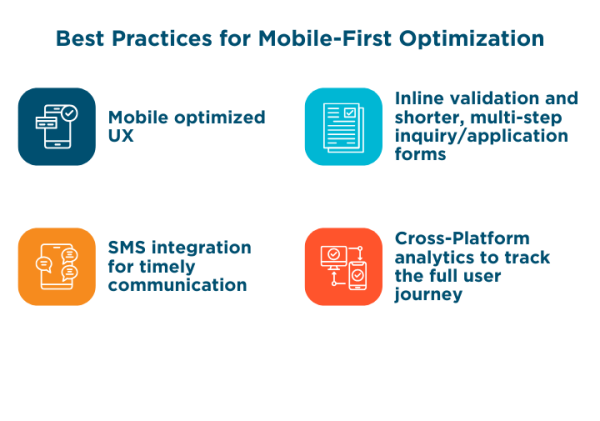
With digitally native students relying heavily on mobile devices, mobile-first strategies are essential:
- Landing pages see six times more mobile traffic than desktop
- Desktop conversions remain 17.6% higher than mobile
Conclusion & Recommendations
|
The era of transactional enrollment marketing is over. Institutions must focus on relational, data-driven engagement across multiple channels. Market leaders are leveraging full-funnel strategies that use each channel’s strengths effectively. Key Actions for Enrollment Leaders: 1. Mandate Mobile CRO: Audit and optimize all mobile-first touchpoints 2. Shift Budget to Authentic, Student-Generated Content: Authenticity drives word-of-mouth and brand loyalty 3. Leverage AI for Hyper-Personalization: Prioritize AI and automation to tailor content, especially in high-conversion channels If you're looking for guidance, support, or solutions tailored to your institution’s needs, EDUTECHLoft is here to help. Book a meeting with us today, and let’s explore how we can advance your goals. |