Blog Post
Improving Student Retention Through Early Warning Systems and Holistic Support

Improving Student Retention Through Early Warning Systems and Holistic Support
Understanding Student Retention and Why It Matters
Student retention has become one of the most critical indicators of institutional health in higher education. Beyond enrollment numbers, retention directly affects tuition revenue, academic outcomes, rankings, and long-term sustainability. When students disengage or leave, the impact extends beyond lost revenue—it signals unmet needs within the student experience.
Students who stop out or withdraw rarely do so for a single reason. Academic preparedness gaps, financial pressure, unclear pathways, limited engagement, and inconsistent access to timely support all contribute to attrition. These challenges are often compounded by operational complexity and fragmented systems, making it harder for institutions to intervene early and effectively.
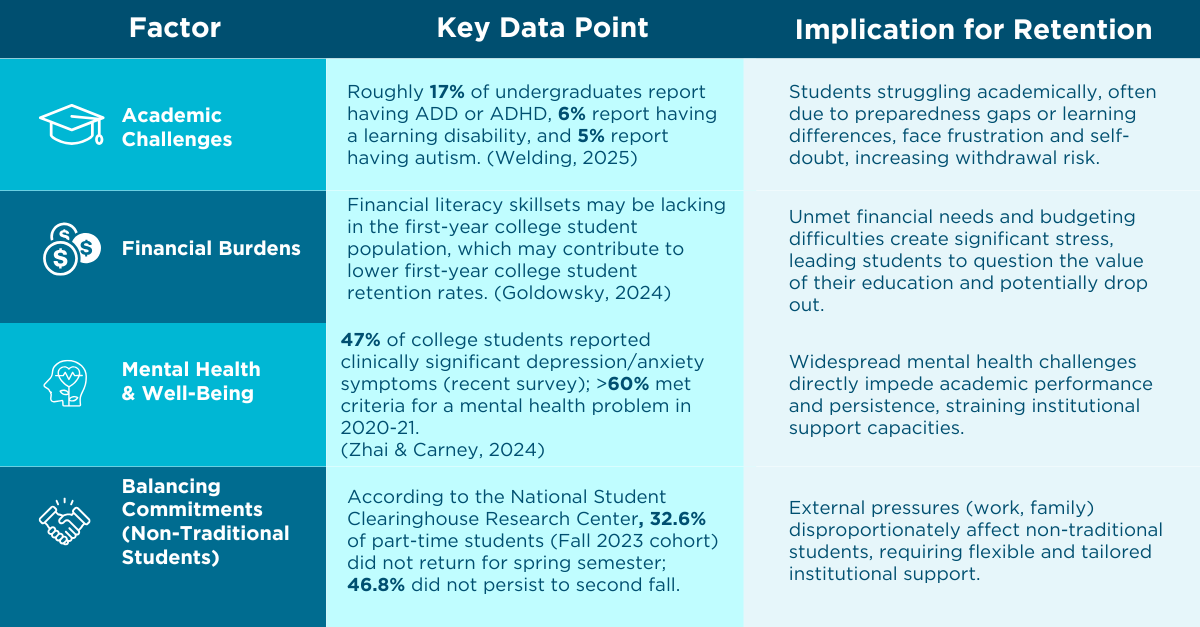
To improve retention, institutions must first understand the obstacles students encounter throughout their journey—and how institutional structures either alleviate or amplify them. The next section explores the key factors that most directly influence student retention and persistence, and where focused action can make the greatest impact.
Key Factors Influencing Student Retention

Methods Higher Education Institutions Can Employ to Tackle These Retention Challenges
Strategies for Improving Student Retention in Higher Education
Higher education institutions must adopt a proactive, data-driven approach to effectively address student retention, integrating various support mechanisms to anticipate and mitigate challenges.
1. Personalized Communication and Outreach
EDUCAUSE's 2025 Students and Technology Report confirms that students expect personalized interactions similar to everyday digital experiences. Institutions can enhance retention by using two-way communication platforms, such as text messaging, for timely and empathetic student support. Projecting genuine dialogue over mass notifications builds lasting relationships and engagement.
2. Enhancing Financial Aid Awareness and Support
Proactively communicating financial resources and offering robust financial literacy programs mitigates student attrition. Efforts like emergency aid have proven successful; during COVID-19, financial relief, such as HEERF, closed retention gaps for first-generation students and significantly reduced financial stress, allowing students to focus on academics.
3. Flexible and Inclusive Learning Options
Offering diverse learning models (online, hybrid) accommodates students’ varied lifestyles and preferences, aiding retention, particularly for non-traditional learners. Evidence shows hybrid learning enhances student engagement and academic performance, creating a motivating and adaptable educational environment.
4. Implementing Early Warning Systems (EWS)
EWS enables proactive interventions by identifying at-risk students through data-driven metrics, such as attendance, Behavior, and Course Performance. Integrating EWS with institutional systems ensures seamless student support, timely interventions, and improved student outcomes.
5. Providing Holistic Support
Comprehensive retention strategies must address academic advising, mental health, finances, and accessibility:
6. Academic Advising & Mentorship: Regular contact with an advisor boosts persistence and academic performance. A USC report on Academic Advising’s Impact on Scholarship Maintenance states that advisor contact increased summer enrollment (61.8% vs. 38.2%), financial aid retention (46.2% vs. 26.2%), and fall retention (91.2% vs. 83.2%).
7. Mental Health Support: Strong mental health services correlate with higher retention; expanding timely care is crucial. Counseling helps: 79% of respondents said that professional help influenced their decision to stay, and students attending six or more sessions experienced greater symptom improvement.
8. Financial Literacy & Aid: Financial education and emergency aid help prevent dropouts, which are vital for maintaining student engagement.
9. Disability Services & Inclusion: About 20.5% of undergraduates and 10.7% of graduate students report disabilities; common needs include ADHD, learning disabilities, and autism. Ensuring equitable access and inclusive practices supports students with disabilities in completing their studies.
For higher education leaders, these integrated strategies enhance the academic environment, supporting both student success and institutional retention goals.

EDUTECHLoft Solutions for Holistic Support
EDUTECHLoft is at the forefront of providing comprehensive solutions designed to aid institutions in fostering student retention. Here’s how our solutions contribute:
● EDUTECHLoft Design®: Our instructional design services focus on creating impactful, engaging, and learner-centered experiences that resonate with diverse student needs.
● EDUTECHLoft Support®: We streamline student success and reduce inefficiencies with our full-scale support solutions tailored to address both academic and non-academic challenges faced by students.
● EDUTECHLoft Integration®: By integrating customized Learning Management Systems (LMS), Customer Relationship Management (CRM), Student Information Systems (SIS), and business intelligence (BI) solutions, we enhance institutional efficiency and support seamless student experiences.
Through holistic support and innovative technology, EDUTECHLoft is committed to transforming challenges into opportunities, empowering institutions to nurture and retain their most valuable asset—students. By leveraging data-driven insights and targeted interventions, we aim to redefine the landscape of student success.
Conclusion
|
Investing in these integrated strategies is more than just an expense — it’s a smart move that can bring big wins in student success, the institution’s reputation, and financial health. Since student challenges are connected, a coordinated response from the whole institution works best, with data systems working together and staff from different departments teaming up to provide smooth, student-focused support. As higher education continues to change, schools that adopt these integrated, data-driven, and student-centered approaches will be in the best position to help their students succeed and to grow sustainably. For more information on how we can help you, schedule a meeting with us or contact us at info@edutechloft.com. |